Reviewed by Rachel Shaver
3/10/26
“My anger was more than a wrecking ball but my dance partner and confidante, the only companion I had. My anger was my escape hatch, my battery pack. Bored to tears, anxiety tap- tapping in my soul’s leaky faucet, there were only zombie footsteps through my days, cut with a white hotness that let me taste life— even if the bites were too big.”
April Soto is full of white hot anger. So much so that she does the unthinkable: she disappears into the Pennsylvania wilderness for ten days, leaving her ten year old daughter with her abuela and great grandmother. Not even April knows when or if she will return. All she knows is that she’s angry, and the emotion has bubbled over and begun begging her to step away. And so she does.
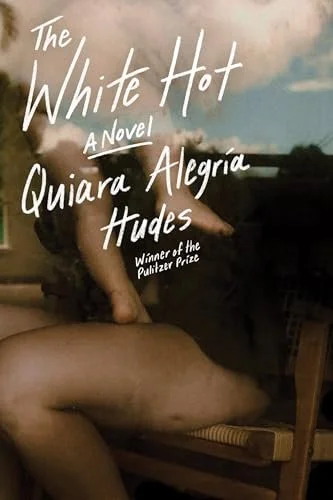
The White Hot is a novel in the form of a letter. An apology, an explanation, a plea to her daughter, Noelle, ten years after the original abandonment. But beyond that, the novel is a beautifully honest exploration of motherhood at its most vulnerable point. April Soto needs to explain to her estranged daughter why she left, and she does so in a desperate letter enclosed with the words “Open when you turn eighteen” written in her familiar handwriting.
The White Hot opens with April watching Noelle present a project to her fourth grade class. The project is the catalyst for April’s guilt. Noelle is a gifted child, in the same way April was, years ago before she was lost in the ever so common cycle of teen pregnancy and poverty that runs through her family. April sees Noelle’s depiction of her mother in the project titled “My Family Home”—an absent mother, an angry mother. The project offers April a painful truth. The Soto’s have always been angry, tracing all the way back to their immigration to America. They are a history of women abandoned by fathers.
Noelle has already begun to internalize the emotional patterns that April recognizes all too well, passed down from her own mother and grandmother, women whose survival strategies have become an unwanted legacy. Overwhelmed and wracked with guilt, April knows she must leave, and in a moment of impulsiveness she buys a bus ticket and tells the clerk to make it one-way.
“Far from home, I closed my eyes. Help me to reclaim what I thought was irreversibly lost. And the rock responded: The universe will build a home around you.”
The premise of this story is simple, and yet it covers a lot of ground in under two hundred pages. Hudes tackles racism, dysfunctional family dynamics, the cycles of poverty and trauma, immigration, and teen pregnancy. Yet this novel does not feel cluttered. Instead, each subject arises organically through April’s memories and confessions rather than a particularly grounded plot. Hudes trusts the reader to assemble the pieces of April’s life through the way she speaks, the conclusions she draws, the details she deems important.
A large portion of the novel follows April through the wilderness. She is dramatically unprepared—no food, no supplies, and only a pair of strappy sandals that she quickly abandons in favor of walking barefoot. As the days pass, the forest becomes both punishing and strangely instructive. April’s hunger, her blisters, her exhaustion all strip her down to the most essential parts of herself. Hudes writes these scenes with a spiritual charge, bringing the wilderness to life on the page as its own character.
“The storm gave the wilderness a task: rebuild.”
Each night alone in the darkness forces her to confront the anger that drove her there and the softer, intangible pieces beneath it—the parts shaped by abandonment, by love she doesn’t know how to express, and the generational ache she is desperate not to pass on.
After the ten days are up, April returns home, but a decision weighs heavy on her mind. How can she mend the life she’s fractured—her own and Noelle’s? The choice she makes is the hardest one available to her, one that requires her to face the truth of who she is, and what her daughter deserves. It asks what love should look like, and if an act of perceived selfishness can ever be explained away, especially if doing so was actually the most selfless decision of all.
Hudes does not shy away from the gut-wrenching ending of her debut novel. April has sent the letter with the hope of forgiveness, but the knowledge that regret is the closest she might get: a weight to carry on her own but one she will hopefully never pass on.
Rating: ★★★★☆
An honest journey of rage and repair. A novel for anyone drawn to broken families, resilient women, and a messy ending made beautiful by lyrical prose.
About the Author:
Quiara Alegría Hudes is a writer, barrio feminist, and native of West Philly, U.S.A. Hailed for her work’s exuberance, intellectual rigor, and rich imagination, her plays and musicals have been performed around the world. They include a Pulitzer-winning drama, Water By the Spoonful, and a Tony-winning Broadway musical, In the Heights (co-authored with Lin-Manuel Miranda). Her screenplay adaptation of In the Heights opens in movie theaters nationwide this June.
Along with her cousin and a dedicated circle of volunteers, Hudes founded and runs Emancipated Stories, a collection of pages written by people who have been or remain incarcerated.
About the Reviewer:
Rachel Shaver graduated from Eckerd College with a BA in creative writing and a minor in literature. She lives in Tampa, Florida with her twin sister and spends her days consuming media in all forms. She has been published in Collision Literary Magazine and worked as editor-in-chief for Eckerd Review, as well as editorial intern for Cleaver Magazine
