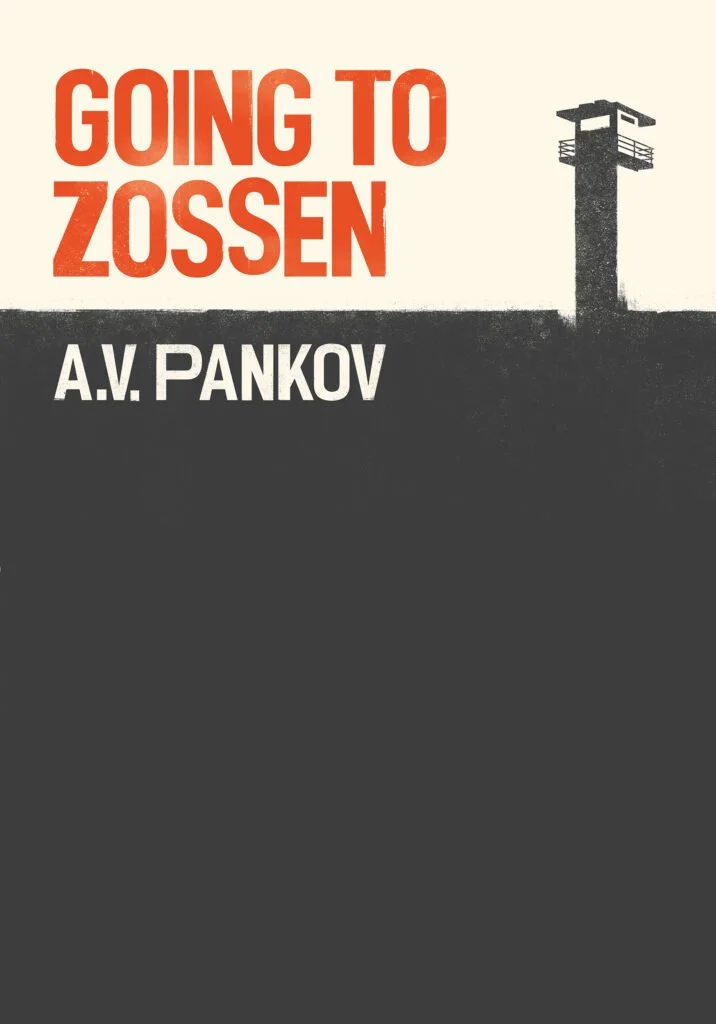
Going to Zossen by A.V Pankov
Reviewed by Rachel Shaver
1/26/26
“The body craved the representation of these objects — control — and though he knew all he could determine with it at this time was the time and place of his own execution, he wanted it in all its tiny magnificence. Foul, crooked democracy. What a mess you've made.”
The year is 1993 and Vasily Mikhailovich has accepted a last-resort job as a director of a juvenile prison after the collapse of the Soviet Union. Around him, Russia is crumbling, and inside the walls of this detention center, he is determined to make a positive change for the children who Russia has cast aside.
Going to Zossen is told from two perspectives—Vasily and Murat, a previously homeless boy, now committed to the detention center after a crime not even he can seem to face. After the unfortunate death of one teen at the detention center, the novel follows both Murat and Vasily through the arrival of a young German boy, Aleksandr, who marks a sudden shift in both their lives. For Vasily, Aleksandr offers the opportunity to make a difference, to see at least one kid leave the prison with a chance to be more than the “street trash” that the rest of the staff views them to be. For Murat, Aleksandr is a reminder. A face with a familiarity that haunts his days in the prison, but also draws him in.
“Rehabilitation. It's just a word without meaning in this context. Once a criminal always a criminal.”
Pankov’s greatest achievement in this novel is how he captures a point in time without the need for historical context. This is a book you can read without knowing anything about Russia or its complicated past. Going in blind does not leave the reader with any lapses in understanding, which is a testament to Pankov’s success in portraying a true piece of historical fiction. Without knowing anything, Pankov’s compelling novel will assure you of its historical accuracy without the need for long passages of exposition. In fact, the story begins in the center of the story and trickles in necessary information through the rich perspectives these characters provide.
In a way, Vasily and Murat are a lens to understand the whole of the state of Russia. Vasily is better off in life, filling in the story of a typical Russian citizen, whereas Murat shows the deeper tragedy that Russia has succumb to. And for both characters, their world is still crumbling, a mirror of their country’s failings. Their stories together paint the picture in its entirety and it is not a pretty one. Instead, it explores the truth of who gets left behind in a society where survival has become synonymous with selfishness.
“Sometimes you get sick of guilt, buckle so much under its cumulative strain that you give up the belief system that had caused you to feel it in the first place.”
The core of Going to Zossen is the painful moral dilemma that plagues every individual in the novel, all in different ways. All around Vasily, his colleagues have begun to turn to their own forms of survival—stealing from the prison, lying, drinking—knowing that their only option is sacrificing others for their safety. Vasily’s internal struggle is lain out before him for the entirety of the novel. Does he persist in his goodness when, everywhere he turns, people are destroying the prison system he desperately hopes to reform? And at what point must he abandon his morality to protect himself and his family? At what point does he give in and succumb to the same corruption everyone else has already accepted?
In the end, Pankov does a wonderful job of connecting humanity at its heart. This novel leaves you with an empathy for all, especially those left behind. The citizens of Russia detest the children of the streets, and despise the ones in prison more. But Going to Zossen is a perfect depiction of how survival will push anyone to the point of delinquency. The country’s decline spares no one, even those who did not initially understand how a child could steal from the more fortunate, or even be pushed to hurt those viewed as better than them.
Even Vasily, in all his kindness and empathy, must choose when enough is enough, despite how desperate he is to remain good. The guilt he feels drives his decisions, but the novel still persists in its hope. The citizens of Russia only want their country to heal, and through all their immorality, their desire for change remains.
“'Do you think we've forgotten how to be human?' She deliberated this for a moment.
'I think our history is not over yet,’ she eventually said. 'A country needs time to recover from its traumas, just like an individual. It needs extra care. But we'll get there. Eventually'”
For the children of the prison though, their story seems set in stone. Murat’s storyline and endless guilt is a stark reminder of the way abandoning one’s morality will stick with them for life. Murat is a glimpse into every character’s future, somehow an answer to the difficult question the novel asks. How does a society move on from such horrors?
Through Murat, we know the answer: they never really will.
Rating: ★★★★☆
A character-driven exploration of the price of morality— Pankov risks discomfort for the end goal of empathy. Historical fiction in the richest sense, accessible to all!
Going to Zossen is out February 3, 2026.
Thank you to Netgalley and the publisher for providing this ARC.
About the author:
Arthur Velker Pankov was born in the western Siberian town of Omsk. At the age of nine his family were granted asylum in Dublin, Ireland, where he studied journalism and later worked as a reporter, first with the Irish Daily Mirror and then The Irish Sun. His writing has appeared in other national titles such as the Irish Times and Newstalk. He is currently based in Mayo.
About the reviewer:
Rachel Shaver graduated from Eckerd College with a BA in creative writing and a minor in literature. She lives in Tampa, Florida with her twin sister and spends her days consuming media in all forms. She has been published in Collision Literary Magazine and worked as editor-in-chief for Eckerd Review, as well as editorial intern for Cleaver Magazine
