A Good Animal by Sara Maurer
Reviewed by Rachel Shaver
“People think sheep are noisy. They can be. Especially at eight AM when they're used to the grain bucket at seven. But when they're lambing or hurt, they don't make a peep […] In the face of death, we, like sheep, were silent.”
The premise of A Good Animal by Sara Maurer is a simple one—a coming-of-age story that has been told before. A teenage boy living and working on his family’s farm in upstate Michigan meets the new girl in town. Mary is a city girl constantly on the move with her father, an officer with the Coast Guard. For now, their lives are brought together, but the doomed nature of it is presented from their earliest meeting. Everett will grow up to take over the family farm as he desires. Mary will leave this small-town world as soon as she can. But in the meantime, they will fall in love, in the messy way teenagers often do.
Along the way, the novel brings us through the everyday life of breeding sheep. There is always something literary and lyrical in a novel framed this way: two simple, potentially uninteresting things brought together in a way that feels new. Even the most mundane of moments carry weight through this structure, and regardless of where Everett’s attention goes, I was happy to follow.
I think, for some readers, this book might come off wordy or distracted by its endless descriptions and references to sheep and farm life, but I would say Maurer’s writing is intentional and even vital to this character-driven narrative. Everett is there on every page, with perfect consistency. There is never a moment where the writing drops his rich, realistic voice. The sheep take on a meaning of their own in many different ways, and by the end, the novel feels deeply like a “circle-of-life” story. Much like life on the farm, Everett’s love story is complicated, full of decisions with consequences on either end.
“When I walk these fields, I feel generations beside me.”
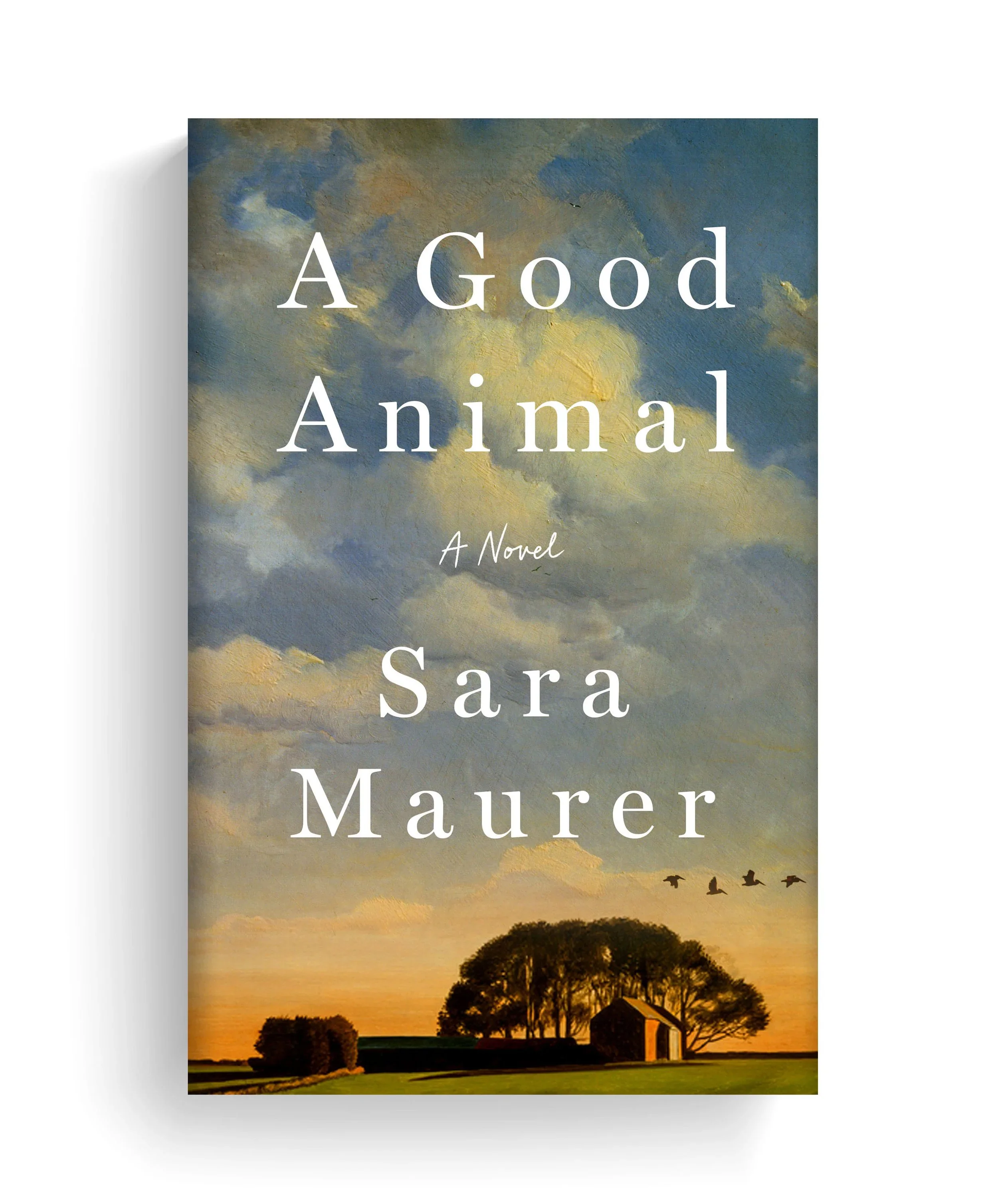
There’s something incredibly smart about the way Maurer uses the inevitable process of sheep farming to portray the narrative of all these characters. From the moment a lamb is born, its life is written. It will be raised in one specific way, and at the end, it will be sent to the slaughterhouse like all the others. There is an early storyline that plays out alongside the beginnings of Everett’s relationship with Mary. His younger sister, Katie, must auction off her bottle-baby sheep, Fluff. Everett knows what a vital moment this is for a kid who will grow up immersed in this life, and yet, he is swayed. He uses his own money to buy Fluff from the auction, stepping in the way of fated life meant for Fluff and Katie. There are moments like this throughout, points where Everett will try to fight the story that is written for him, for his family, for Mary.
Like any good coming-of-age novel, we see Everett try, fail, and try again. This novel will not only leave you caring deeply for Everett, but for every character you meet along the way. Maurer has created a world where every choice leaves someone or something behind, and after spending the novel growing close to each character, the weight of every decision is crippling, both for Everett and the reader. Still, you will hope Everett gets the perfect farm life he desires, but also that Mary will finally get away from the countryside where she wishes to be. You will want both and know the two cannot coexist. Therein lies the success of the novel. Maurer’s ability to bring every character to life (including every sheep!) is what makes this story so heartbreaking in every ending it writes.
“ The fact of the matter was the fair was terminal. [...] I can’t tell you how many kids I’ve seen chasing after those packer trucks, bawling, shaking a feed pail, wanting to give their animals one last comfort before they went.”
The ending of this novel is abrupt and, like it so often goes in literary fiction, will leave the reader uncertain where this story lands. Again, I think where some might call this rushed, I would commend Maurer again for an ending that exists, again, in a perfect context of this world. We want clean endings, ones that leave us feeling like all the loose ends were tied, ones where characters get what they deserve or come to accept what was never theirs. A Good Animal is not a book that gives us that.
The blurb of this novel tells of an “impulsive choice—one that will change everything.” The choice in question does not come until much later, but this is not to say the novel is poorly-paced. Maurer paces this book to favor the characters first. The story must come later. Because, much like the breeding of sheep goes, no matter how attached you may become to them, you must let them go as you always knew they would. This novel will present its emotional core only after you have grown to know these characters and connect with them all deeply.
Maurer denies the reader the kind of ending we’ve been taught to expect. Because, in the end the packer truck will always come. The sheep will go, as you always knew. And after that, “the inevitable cure—the bullet in the head.”
Rating: ★★★★★
A literary coming-of-age novel on loss and love. As much a love story as it is an encyclopedia of sheep facts, and somehow that makes it richer!
About the Author:
Sara Maurer lives with her family in Michigan's Upper Peninsula. She earned her bachelor's degree from Albion College and her master's from Eastern Michigan University. She honed her creative writing craft while completing Stanford's Continuing Studies Novel Writing Certificate program. Her short fiction can be found in Dunes Review, Hominum Journal, and The Twin Bill. A Good Animal is her first novel.
About the Reviewer:
Rachel Shaver graduated from Eckerd College with a BA in creative writing and a minor in literature. She lives in Tampa, Florida with her twin sister and spends her days consuming media in all forms. She has been published in Collision Literary Magazine and worked as editor-in-chief for Eckerd Review, as well as editorial intern for Cleaver Magazine
